
Community-Engaged Teaching and Learning
Here at the Texas A&M University Center for Teaching Excellence, we define Community-Engaged Teaching and Learning as: "mutually beneficial partnerships between University instructors, their students, and community stakeholders. These strategic community-oriented teaching approaches foster authentic real-world learning, civic engagement, and selfless service which are key to collaborative and impactful educational experiences."
Community-Engaged Teaching and Learning approaches can help facilitate high-impact student learning in ways that support communities. Through carefully selected and maintained community partnerships–which connect students who want to make a difference in the world with opportunities to be a part of that change–students can engage in meaningful real-world academic and professional learning experiences. Community-Engaged Teaching and Learning approaches aligned with TAMU Undergraduate Learning Outcomes can have the potential of exposing students to real-world learning and experiences.
As a land-grant institution, Texas A&M University is already part of many efforts to support and enrich the lives of the people of Texas, especially in local communities. The Community-Engaged Teaching and Learning Fellows Program aims to provide seed money to support University instructors who either have designed or want to begin designing project-based learning opportunities that benefit these local communities.
Contact Dr. Nate Poling (npoling@tamu.edu) with any questions.
Selection Criteria
Applicants must meet the following conditions:
-
University instructors who have less than 3 years of experience incorporating Community-Engaged Teaching and Learning methods and approaches.
-
Tenure-track and APT faculty members who are interested in involving themselves with Community-Engaged Teaching and Learning.
-
Ability to identify and/or describe potential community partner(s) and potential steps for developing a sustainable relationship.
-
A new or existing course that they would like to design or modify
-
Ability and means to teach this course and implement what they have learned during the implementation phase of the fellowship program.
-
Willingness to engage in educational research involving their course and classroom(s).
Application
-
Teaching Philosophy Statement
-
Letter of Support from Department Head or Dean
-
Project Proposal and Timeline (Please limit to no more than 3 typed pages, single-spaced)
-
Title
-
Detailed Project Description and Rationale
-
Describe possible approaches to addressing these needs/issues.
-
Describe Potential Community Partner(s) and Potential Steps for Developing a Sustainable Relationship
-
Project Deliverables
-
Impact on Student Learning and Engagement
-
Connection to and Impact on Community Needs and Issues
-
You can access a proposal application packet guideline document here, and view the Evaluation Rubric here. Please limit your proposal to no more than 3 typed pages, single-spaced.
Timeline
General Call for Applications: October 2023
Deadline for Applications: December 8th, 2023
Acceptance Notifications by: January 2024
Program Structure and Expectations
University instructors chosen for a Community-Engaged Teaching and Learning Fellowship will be expected to engage in the following activities over the course of the 1.5 year duration.
-
Design and implement new or existing course using Community-Engaged Teaching and Learning instructional methods and approaches (e.g. meet regular project milestones/checkpoints throughout the fellowship duration)
-
Measure student learning and impact on the local community using various quantitative and qualitative measures (e.g. surveys, reflections, focus groups, or interviews)
-
Disseminate information and resources on Community-Engaged Teaching and Learning via multiple formats (e.g. facilitating interactive professional development sessions, engaging in individual consultations with University colleagues, sharing instructional and organizational materials, and presenting at local/national/international conferences)
-
Serve as a mentor and expert for faculty interested in learning about and implementing Community-Engaged Teaching and Learning (e.g. Contribute to a Community-Engaged Teaching and Learning Faculty Panel Discussion)
-
Participate in monthly Fellows meetings and individual check in meetings
-
Create faculty-friendly resources and how-to guides for others who are interested in implementing Community-Engaged Teaching and Learning in their own classrooms
Funding Disbursement
The disbursement of funds will be upon participant completion of certain project milestones:
-
Establish reciprocal relationships with community partners ($1000)
-
Design/redesign course and course materials ($1500)
-
Teach the course and engage in reflection ($2500)
WECARE (Win-win-win Effects: Community Advancement through Reciprocal Education)
We aim to redesign an undergraduate course, EHRD374 (Organization Development, OD) to make it a CETL course by developing real-world application assignments. Through the projects, students can interact with the community partners and learn through real-world transformative learning experiences. We expect that this relationship building process will have win-win-win effects for the students, instructors, and community partners. In particular, this strategic approach enhances student learning outcomes, civic engagement, and selfless service, which are keys to collaborative and impactful educational experiences.

Dr. Dae Seok Chai
Dr. Dae Seok Chai is an Associate Professor of Human Resource Development (HRD) in the School of Education and Human Development at Texas A&M University. Dr. Chai has been a proactive and passionate researcher with multiple refereed journal articles and book chapters. The quality of his research was recognized by the Academy of Human Resource Development (AHRD) through its Early Career Scholar Award and Cutting Edge Award. Dr. Chai has consulted various types of organizations in developing diverse types of training programs, including change management, cultural diversity, global talent development, and leadership.
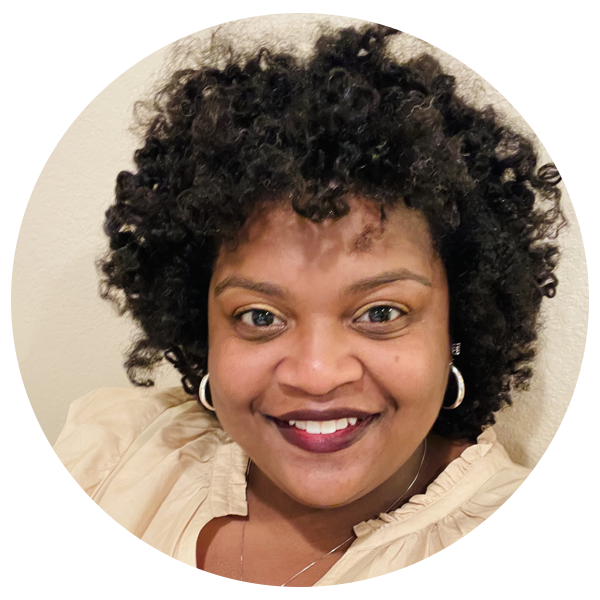
Dr. Rhonda Fowler
Dr. Rhonda Fowler is a Clinical Associate Professor, the EAHR Undergraduate Leader, and Internship Coordinator in the Department of Educational Administration and Human Resource Development. Her research interests and areas of expertise include HRD career development, fostering an inclusive learning environment for first-generation students and students of color, particularly African American and Hispanic students, providing staff and underrepresented minority students with mentorship, and expanding educational opportunities for all students. She has developed a formal mentoring program for the staff of the School of Education and Human Development and is currently developing programs for first-year, transfer, and students of color in HRD.
Promoting Community-Engaged Worksite Health Promotion Teaching and Learning
The community-engaged teaching and learning project that Dr. Chen will lead during the fellowship will engage her students in the development, implementation, and evaluation of worksite health promotion programs for workers with disabilities in Bryan and College Station (BCS), Texas. Specifically, this project will give Texas A&M University students the opportunity to use the knowledge gained from the HLTH 410 Worksite Health Promotion course to provide critically needed assistance to BCS workers with disabilities. The students will work in groups to: (1) develop a worksite health promotion program that addresses health issues that are important to people with disabilities in BCS workplaces, and (2) evaluating existing worksite health promotion programs for people with disabilities in BCS workplaces. Local disability communities will also benefit from the products produced by students to promote better health for their members.
Dr. Lei-Shih (Lace) Chen received her Ph.D. in Health Education from Texas A&M University in 2007, joined the Department of Health and Kinesiology in 2009, was tenured and promoted to associate professor in 2014 and promoted to full professor in the Department of Health Behavior of the Texas A&M University Health Science Center School of Public Health in 2023. In her nearly 15 years of service at Texas A&M University, Dr. Chen has taught a wide range of graduate and undergraduate courses, chaired or co-chaired 39 graduate student committees (29 having graduated thus far), and mentored 10 post-doctoral associates (nine having completed training to date), and over 300 undergraduate students. Dr. Chen’s teaching efforts have been recognized via teaching and education awards including the Department of Health and Kinesiology Teacher of the Year in Health Education Award (2015), the Texas A&M University Association of Former Students Distinguished Achievement Award for Teaching (2022), and the Education Award of the American Society of Human Genetics (2023).
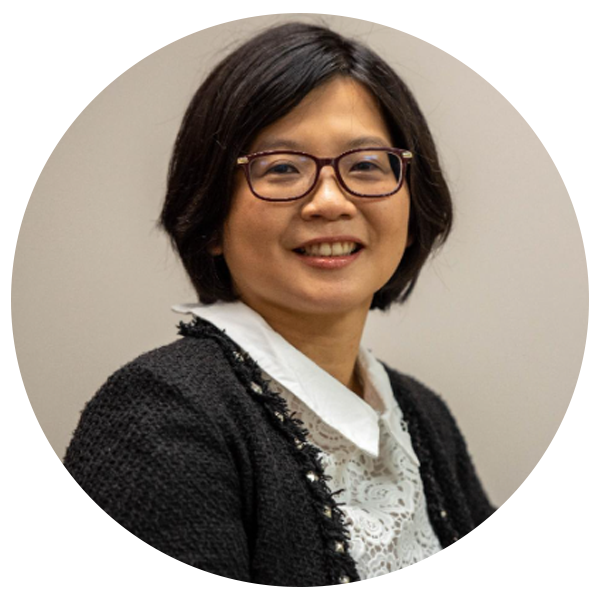
Dr. Lei-Shih (Lace) Chen
Ecstatic about Engineering! Bringing Engineering Mechanics into Grade 6 – 12 Classrooms
For the CARE2 Fellowship program, Dr. Cope plans to incorporate lessons on engineering mechanics into high school and middle school grade levels. The project aims to enhance educators’ curriculum for the Grade 6–12 levels on applications of engineering mechanics in appropriate grade-level math and science courses. Objectives are to (1) promote STEM literacy, (2) demonstrate practical application, and (3) involve the local school districts. The project will focus on developing lesson plans, classroom demonstrations, and interactive instructional videos on how engineering mechanics applies to many aspects of the engineering field. Dr. Cope will implement the deliverables of the project through three approaches: (1) workshops for Grade 6-12 educators, (2) summer camps for students in Grades 6-12, and (3) individual visits to local school districts showing students why we are ‘ecstatic about engineering’. Key partners include instructors, the Spark! PK-12 Outreach program, and the Engineering Studio for Advanced Instruction & Learning (eSAIL) within the College of Engineering.
Dr. Dale Cope has served as a Professor of Practice for over eight years, primarily instructing sophomore-level engineering courses. He has transformed course material from traditional lecture courses to active learning courses, incorporating a variety of effective teaching practices to improve student engagement, thereby increasing their achievement of course learning objectives. These practices are implemented for course sections with large enrollment, ensuring consistent delivery of course material and instruction across multiple course sections with annual enrollment of over 500 students. Dr. Cope is best known for developing effective demonstrations to illustrate fundamental engineering concepts in the classroom. In recognition of his teaching excellence, Dr. Cope has received the College of Engineering Instructional Faculty Teaching Award in Spring 2022, the Professor of Excellence Award from the Aggie Club of Engineers in Spring 2021, and the Best Teacher Award from the TAMU Student Chapter of the American Society for Mechanical Engineers in Spring 2018.
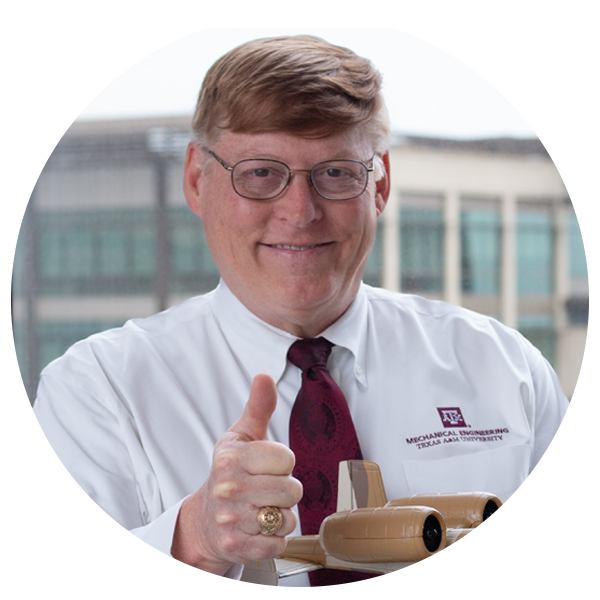
Dr. Dale Cope
TAMU Biomedical Science in Motion (TBSM)
The overall goal of this CETL project is to provide an opportunity to biology students at TAMU to interact with health-related institutions to tackle local community problems in a didactic and experiential manner. This project is, therefore, a community engaged learning project that provides a way for students to identify evidence-based tips/approaches and apply the unique scientific skill set that they have acquired during study of Anatomy and Physiology course to a local community problem with their partner community members. This will benefit both TAMU, students and the community.
Dr. Ahmed Hashash completed his Ph.D. from Manchester University, UK. He was a fellow of the California Institute of Regenerative Medicine and New York University Medical School (MSSM). He worked as a senior biomedical research scientist at Mount Sinai School of Medicine of New York University and was promoted to Assistant Professor of Biomedicine in California. Dr. Hashash joined the University of Edinburgh (UK)-Zhejiang University as Associate Professor of Biomedicine. In August 2022, Prof. Hashash has joined Texas A&M University as Associate Professor of Biomedicine, where he teaches courses on human Anatomy and Physiology.
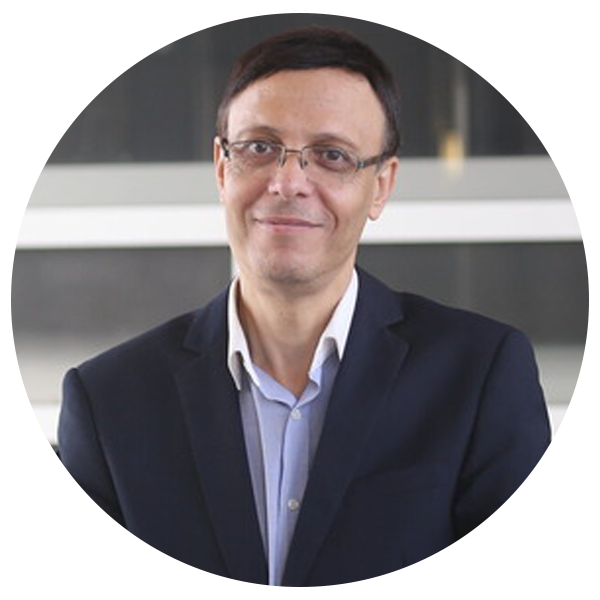
Dr. Ahmed Hashash
Enhancing Community Partnerships and Engagement Through Data Analysis and Education
Dr. Clark’s community engagement project aims to strengthen student’s data-driven decision-making skills through community partnerships and capacity building outreach. The objectives of Dr. Clark’s project are to create real-world learning experiences by partnering with local tourism and hospitality organizations, facilitate critical thinking using real industry data, and generate positive impacts for small tourism and hospitality businesses in the Bryan-College Station area through education. The expected outcomes of this project are to address a skills gap among students, improve working conditions for tourism and hospitality employees, and promote local economic recovery.
Dr. Connor Clark is a first-year Assistant Professor in the Department of Hospitality, Hotel Management and Tourism at Texas A&M University. Connor’s research and teaching focus on diversity, decision making, sustainable tourism, destination development, resource management, and capacity building. Much of the inspiration for Connor’s teaching and research interests stem from his previous work experience leading teams to mentor hundreds of small business owners from around the world.
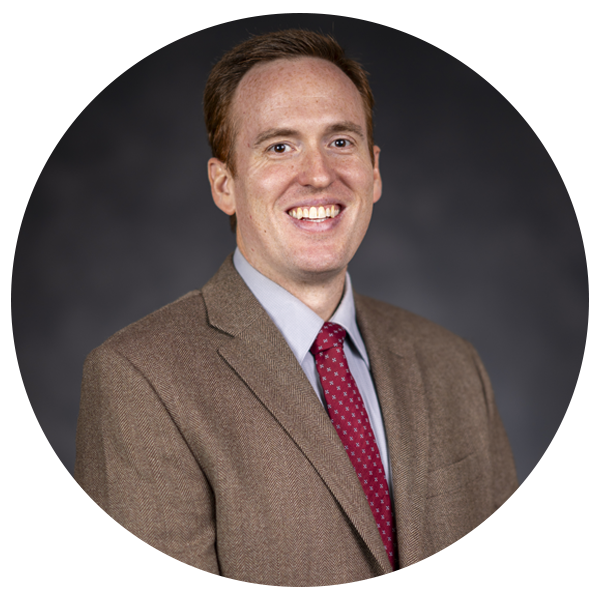
Dr. Connor Clark
Community-Engaged Approach to Teaching Agricultural Marketing
This project is to implement and evaluate a community-engaged project in an undergraduate agricultural marketing class. The main goals are to: (1) empower students to develop and evaluate adaptive marketing initiatives in collaboration with partners in the Brazos Valley community (hereinafter local food partners) through a real-world consumer-focused research project; and (2) increase the visibility of local food partners in the community by increasing consumers’ (or users’) interest in the partner businesses through the application of marketing strategies (e.g., social media marketing, advertising, etc.).Local food partners will include local food business owners (e.g., restaurants, wineries, etc.) and private food assistance services (e.g., food pantries).

Dr. Grace Melo
Dr. Grace Melo is an Assistant Professor in the Department of Agricultural Economics at Texas A&M University. Her research focuses on studying decision-making to inform agricultural and food policy. Her current research focuses on the role of behavioral insights in policy design using different data sources (experimental data, expenditure data, etc.). Her most recent work focused on food insufficiency, mental health, and nutrient information. Prior to coming to Texas, she was an Assistant Professor in Chile, where she conducted research on food policy. She has published her work in high-impact journals, including Lancet and Food Policy. She has taught Agricultural Marketing and Food Economics at undergraduate and graduate level.

Dr. Chrystol Thomas-Winston
Dr. Chrystol Thomas-Winston is an Assistant Professor and Extension Specialist for Community Economic Development with Texas A&M AgriLife Extension Service in the Department of Agricultural Economics. She is an experienced applied economist with extension, research and teaching expertise in economic development, macroeconomics, economic and fiscal impacts, finance, trade, and agricultural policy. Dr. Thomas has a bachelor’s degree and master’s degree in economics from the University of the West Indies and her doctoral degree in agricultural economics from Texas A&M University. Prior to her career in higher education, Dr. Thomas worked in central banking and international development banking as a macroeconomist and has served in many leadership roles throughout her career and in the community.
Developing a Project-Based Service-Learning Capstone Experience for an Information Technology Service Management (ITSM) Curriculum by Engaging Students in Providing ITSM Consulting Services to Small Communities
In this project, we plan to design and develop a project-based service-learning experience as a capstone experience for the BA-ITSV curriculum. This capstone experience will be a synthesis of all the knowledge and skills the students have accumulated throughout the ITSV curriculum, as well as a platform for students to apply their skills and knowledge to real-world small communities by identifying and addressing the real IT needs and issues of those communities. The project would allow our ITSV students to provide essential ITSM consulting services to underserved rural small communities. These services are vital for community growth and development, addressing their lack of access to IT resources and expertise.

Dr. Bin Mai
Dr. Bin Mai is currently an Assistant Professor of Information Technology Service Management (ITSV) in the Department of Engineering Technology and Industrial Distribution. His main research interests include Information Technology Service Management, Cybersecurity decision making, Economics of IT/IS, and Behavioral issues of IT management. He is instrumental in the design of the ITSV curriculum and has extensive experience in teaching courses in ITSV.

Dr. David Sweeney
Dr. David Sweeney has been in Technology Management for 35 years, serving in multiple roles including Chief Information Officer and Chief Human Resources Officer at the Texas A&M Transportation Institute, and Director for Information Technology for the Division of Student Affairs at Texas A&M University. Dr. Sweeney was the first Program Coordinator for Adaptive Technology Services at Texas A&M University, a program in the Disability Resources office. Dr. Sweeney recently retired from the Texas A&M University System and has returned as a working retiree to lead the TAMU College of Engineering's new IT Service Management degree program. Dr. Sweeney also teaches in the program, both the introductory and the capstone courses - bookends, so to speak.